


















News
август 25, 2020
Blog



Early detection of frost with non-invasive road monitoring technology
Thanks to a new patented technology, Boschung invented the first way to detect frost on the road before its actual formation with non-invasive technologies. This is possible with the new generation of r-condition sensors, Boschung remote road monitoring devices.
Boschung has always been over its history a pioneer to provide anticipated alarm against ice dangers on the pavement to road and runway maintenance operators. This has been the case with the innovative introduction of the active pavement sensor technology in the ‘60s and its continuous improvements over the years. The active pavement technology remains unequalled and have proven tremendous values to all convinced users – the active technology probably helped to avoid thousands of accidents, saved lots of lives and also reduced salt spreading in millions of tons!
With the introduction of the non-invasive early detection of frost, Boschung continues to apply the concept of early warnings so that users can get the same advantages as with active pavement sensors.
Non-invasive sensor with frost early warnings
So far, non-invasive sensors could only send real time data, implying that the detection of frost/ice was only possible once the danger was already present on the roadway!
Such non-invasive technologies apply a near infrared laser system that analyzes backscattered signals in real-time. The reflection of the light waves allows the system to detect the particle sizes to determine the surface conditions.
Thanks to a technology patented by Boschung, the first non-invasive road condition sensor of the entire market was developed with the capability to provide early warnings before the formation of frost. In order to deliver this information, the sensor – called r-condition – evaluates the reflected radiation between the roadway and a reference surface made of a metal plate, the so-called passive early-detection disk. Since the formation of ice occurs earlier on the metallic material than on the road, it can return a warning accordingly.
The passive early-detection disk is, as per its own denomination, not an active element to place on the road. This is a reference plate with a diameter of 10 to 15 cm, for a very thin height. As a small element with no wires, the positioning on the roadway can be made in a very quick action, not requiring much special tooling.
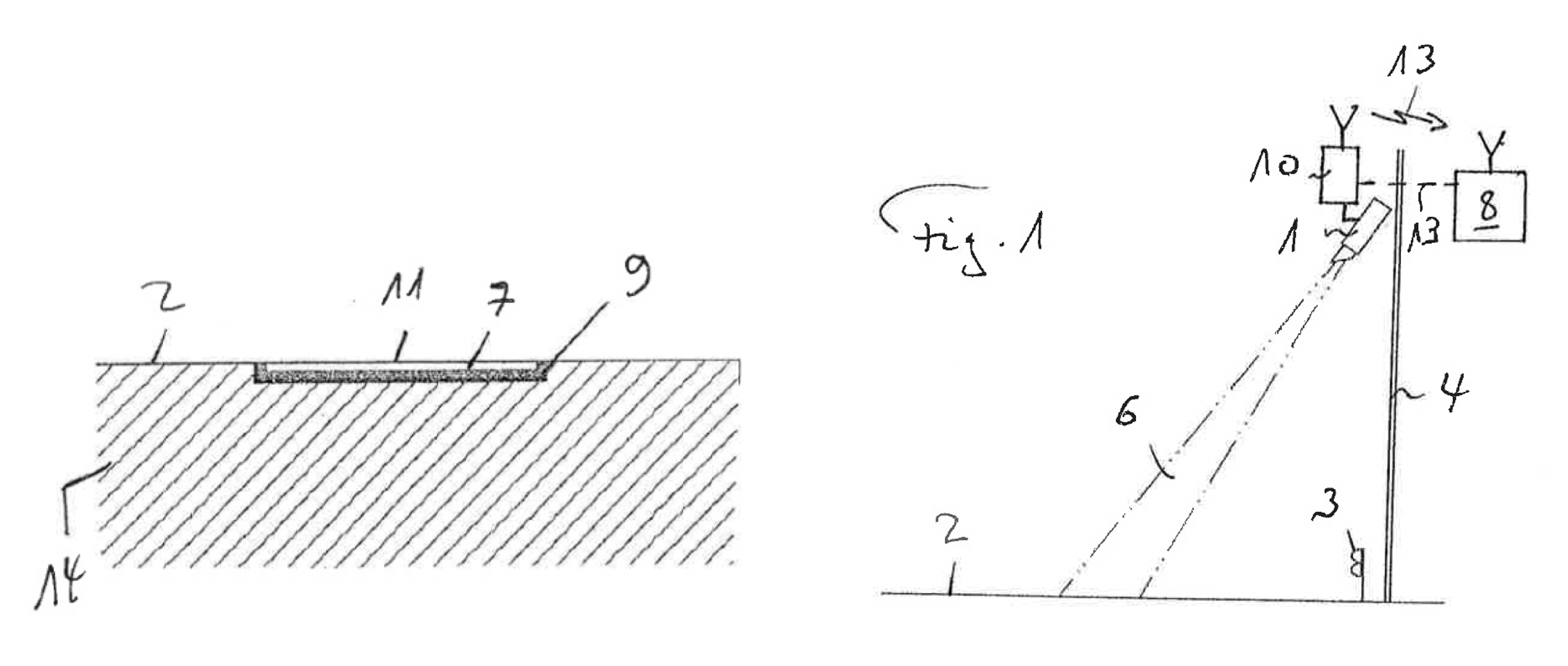 Image source: European patent
The Boschung r-condition series
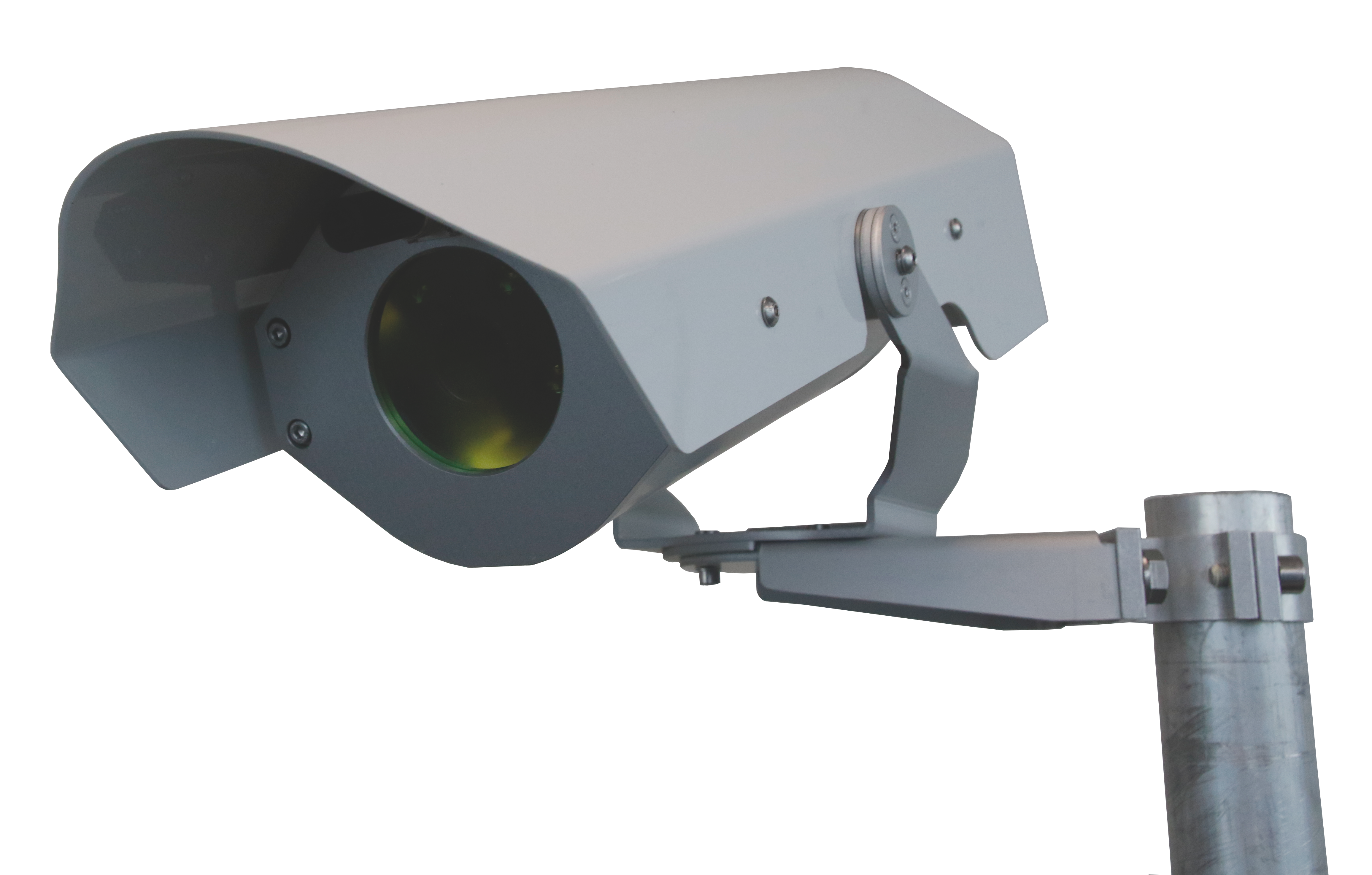
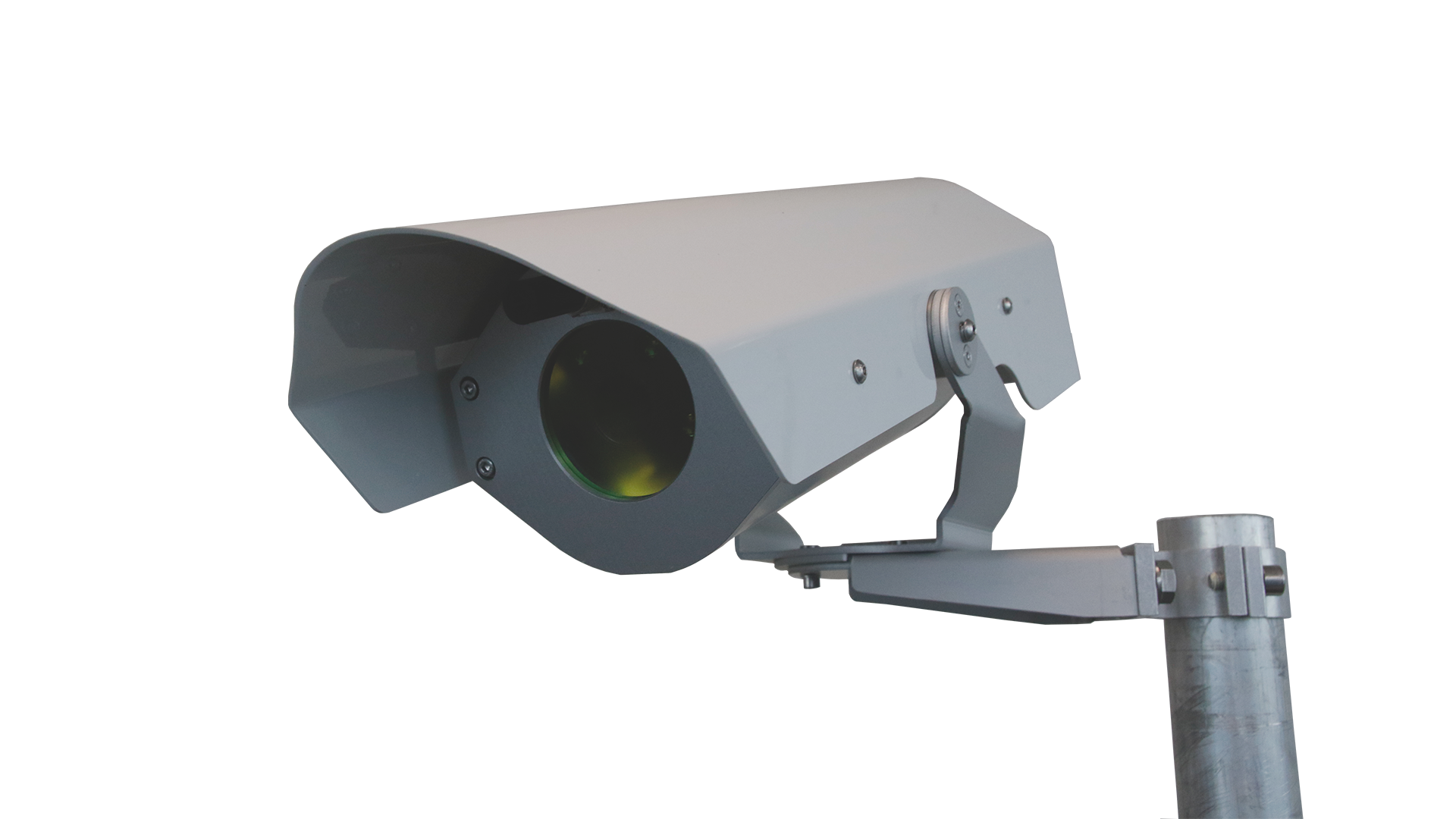
The r-condition provides in a single device all necessary measurements for the monitoring of road and runway surface conditions. It measures the road temperature, detects the appearance of water, snow and ice formation and provides the surface conditions in various states. In addition, it measures the water film thickness and calculates the road friction coefficient.
The newly introduced r-condition is offered in a series with scalable functionalities:
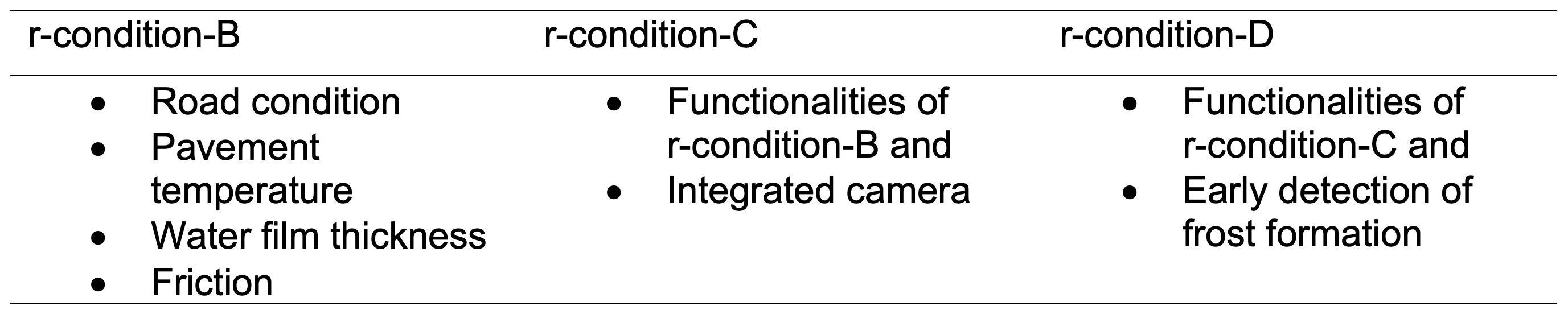
The r-condition-C has an integrated camera to be used as another camera on a road weather station. The pictures can be sent directly to the management software BORRMA, where live pictures as well as historical pictures can be analyzed. Real-time pictures are also available on a smartphone app.
Applications in weather information systems
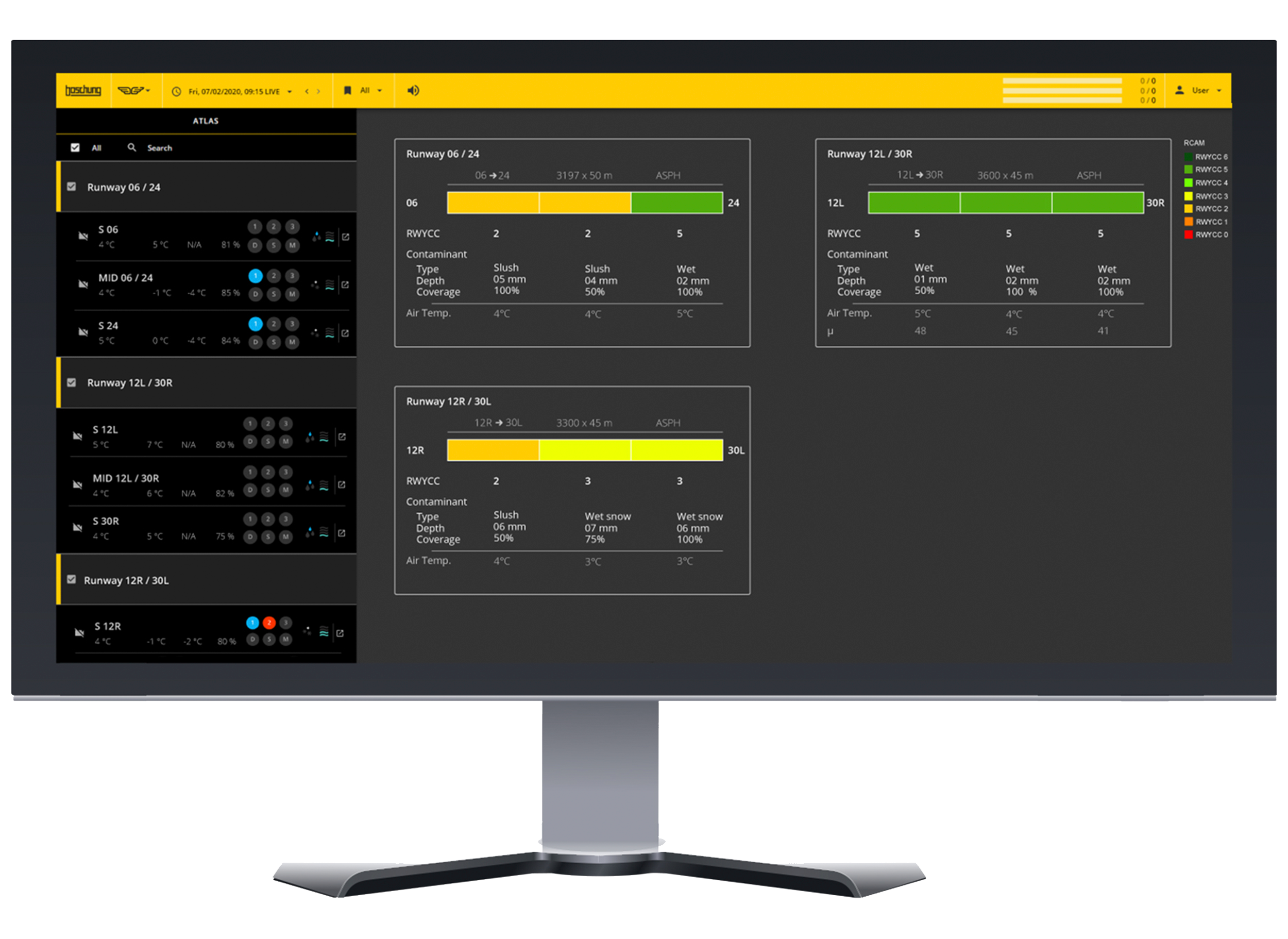
Be it as a stand-alone device or integrated into a Boschung ice early warning system RCM500-NT, the r-condition provides measurements in rough meteorological conditions. Specific warnings are sent and displayed on the BORRMA management software, mostly depending on the surface state and temperature.
While the main application is for road condition monitoring in the frame of road maintenance in winter, the r-condition can be incorporated in airport systems for safety monitoring of taxiways and apron areas.
The r-condition can also be integrated into any third-party weather systems. With common interfaces, as well as open protocols, measurements can be easily transferred to any pre-configured processing unit.
Easy installation and reduced maintenance
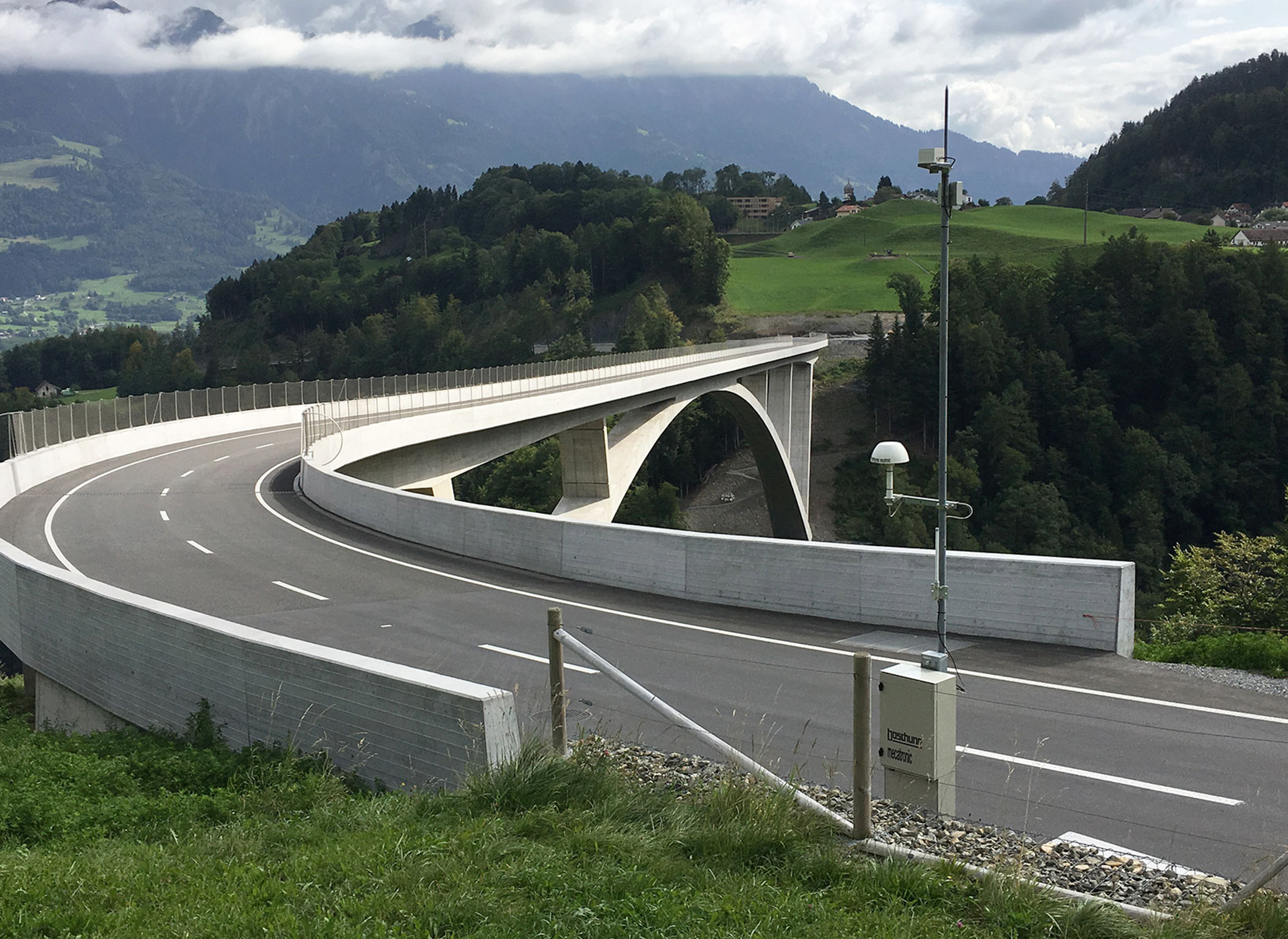
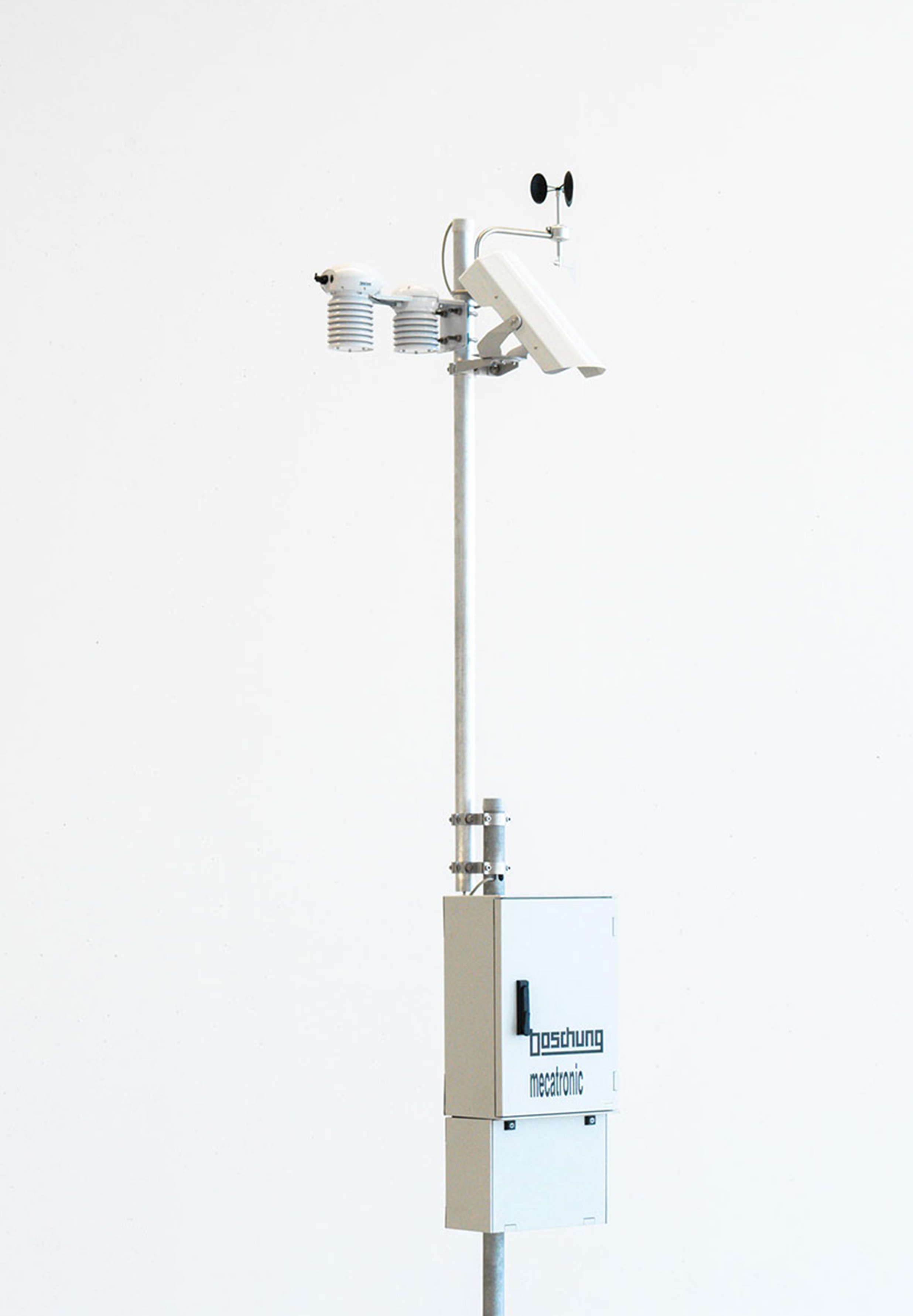
Easily installed on a mast or an existing structure, the r-condition does not require any works on the road (except the version with passive early-detection disk). The calibration user interface is intuitive so that the device is ready to be used within minutes.
In addition, the r-condition focusses on efficiency in operations and maintenance optimization, with the following attributes:
- heating system to avoid the creation of ice and moisture on the lenses;
- energy efficiency with power consumption lower than 10 Watt in heating mode;
- auto-test and alarms for pre-maintenance checks.